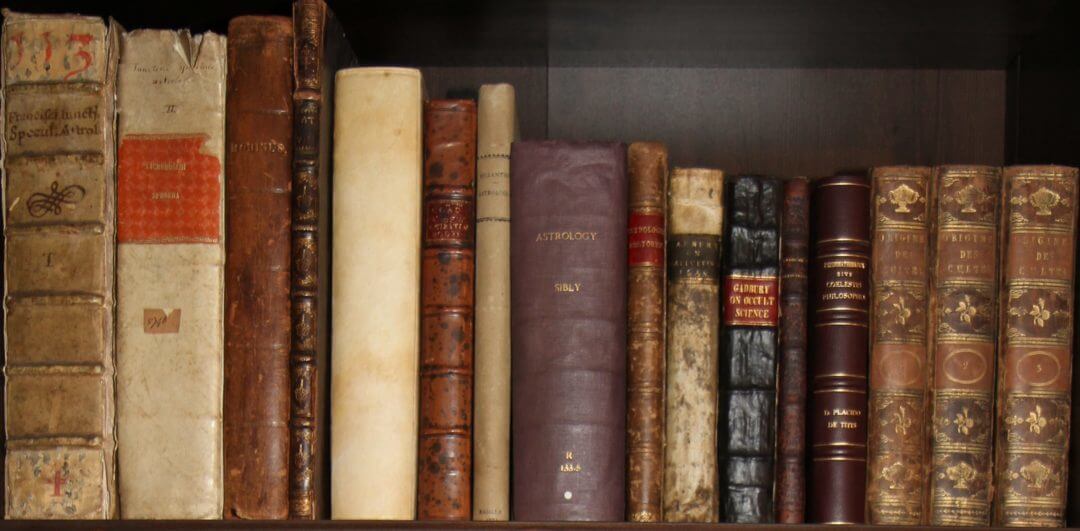
How to date early editions of Sepharial’s book “The Silver Key”
Sepharial (Walter Gorn Old) was a versatile writer on astrological, divinatory and broader theosophical topics. Several of his books were included on W. D. Gann’s recommended reading list, making them especially sought after with collectors in the original editions.
Early editions of Sepharial’s books are difficult for the non-specialist to date, owing to the frequent absence of reliable dates in print, or in some cases of any dates at all.
Here is a guide to dating early editions of his book The Silver Key, which was published by Foulsham and ran through at least five distinct printings between 1913 and the 1930s.
All of these printings are bound in cloth with a silver-stamped picture of a key and silver-stamped titling on the front board, but that is where the similarities end.
How to Identify the First Edition of 1913 (5 Pilgrim Street, undated)
Do not make the mistake of assuming that any copy of The Silver Key that meets the above description is a first edition. Only a small fraction of such copies are. This is something many booksellers, professionals and amateurs included, get wrong, perhaps in their desire to maximise their returns from selling early editions of the book, and perhaps from naiveté and inexperience with Foulsham books, but they are not all alike.
Identifying a true Foulsham first edition of Sepharial’s The Silver Key is really simple with practice, but you need to know where to look. The first edition has the following unique distinguishing features not present on any later Foulsham impression:
1. Publisher’s address in print on the title page must read: 5, Pilgrim Street, London. This was Foulsham’s address only from 1912 to 1917. Therefore the true 1913 first edition, as recorded by the British Library and other library sources, must have this address on the title page. Any Foulsham printing without this address is not from this time window, and any copy of The Silver Key without this address in print on the title page is not the first edition, full stop!
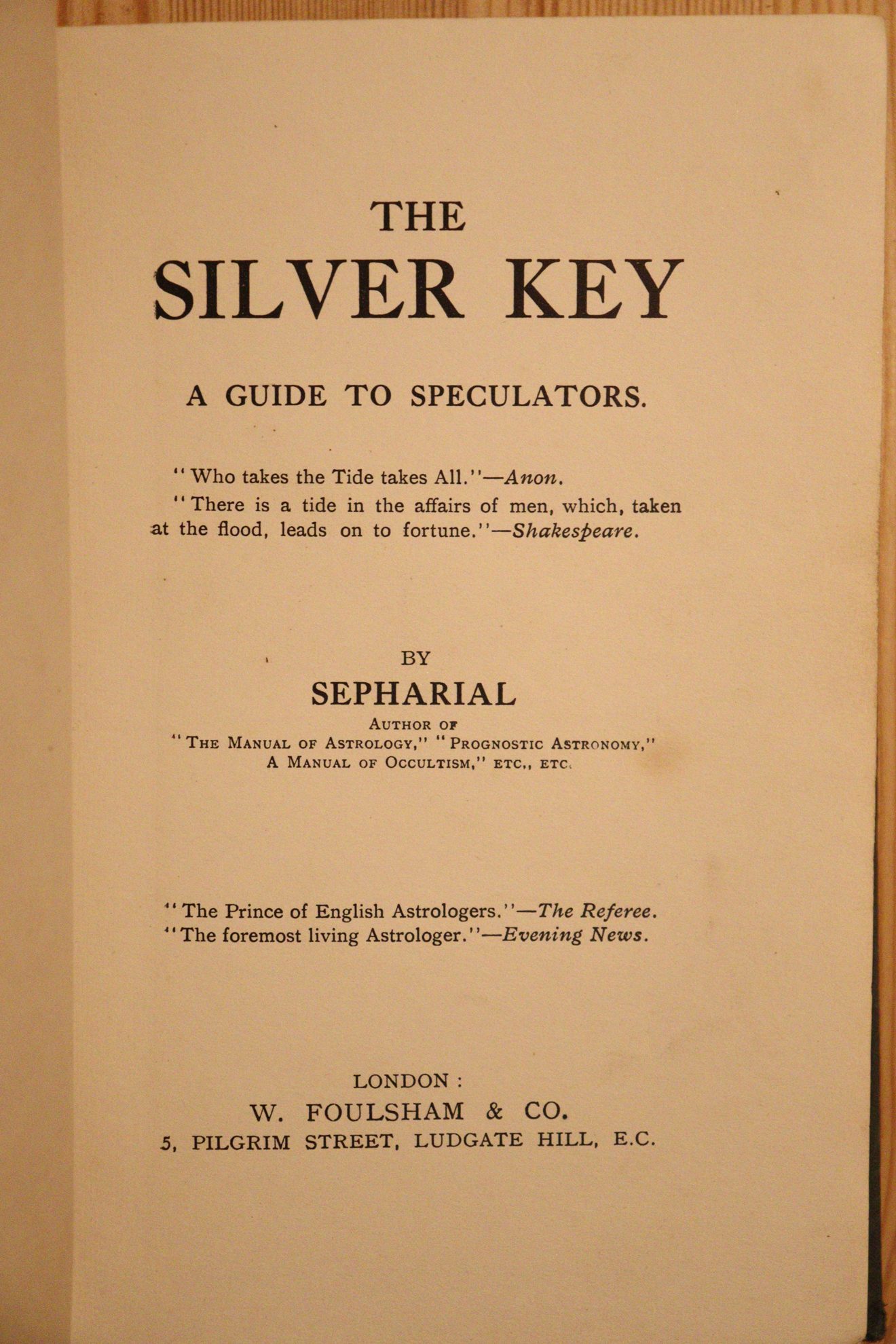
2. Pagination: only the first Foulsham edition has this pagination:
[2 leaves] + [pp. 5-7] + [pp. 9-136] + [8 pages of advertisements]
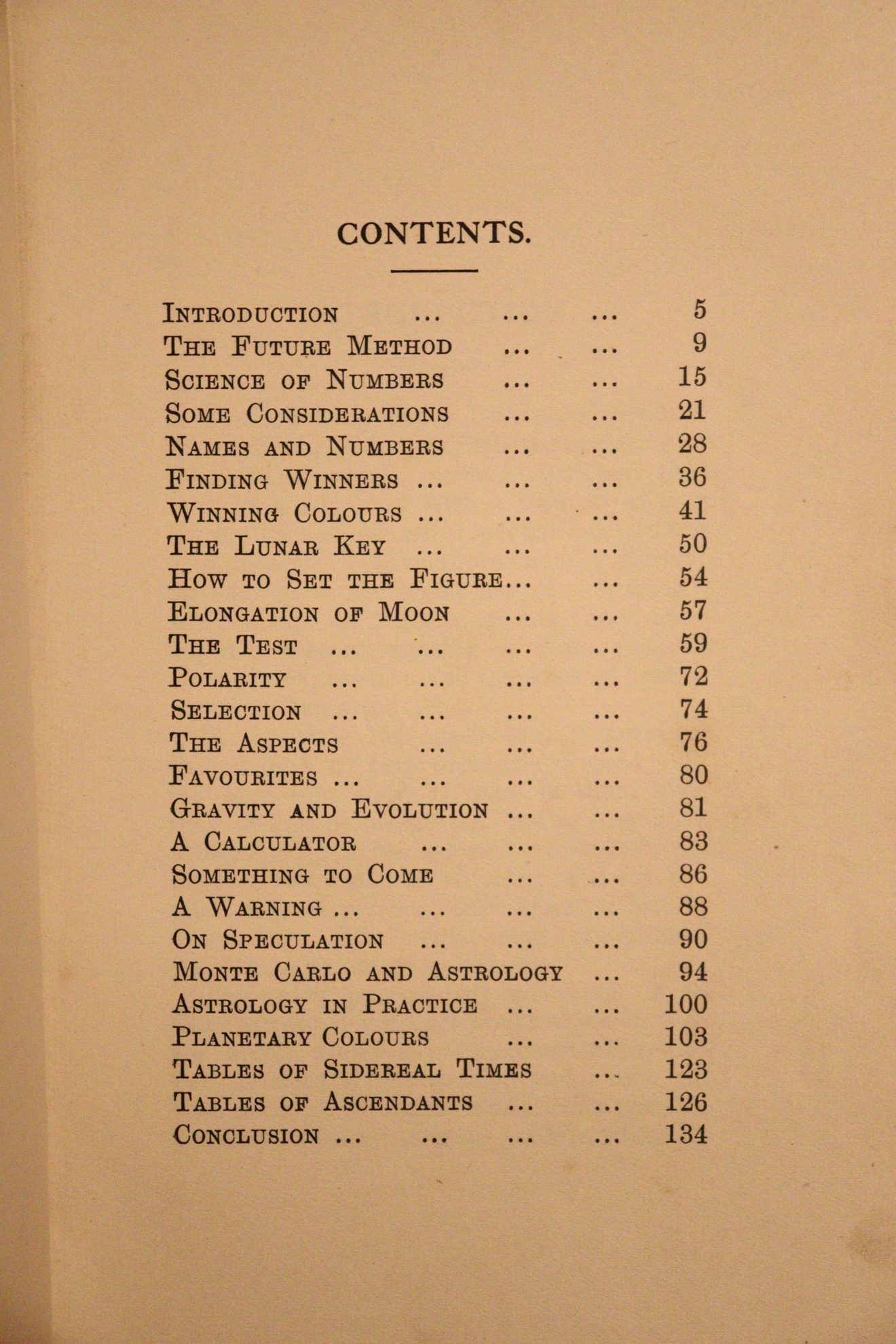
All later editions by Foulsham were truncated to at most 94 main pages, and not only as a result of revised typesetting – at least one chapter was found only in the first edition, and was then editorially culled altogether from the second edition and all reprints thereof. Thus, you can immediately tell that you are not looking at a first edition when the pagination does not extend beyond p. 93 or p. 94.
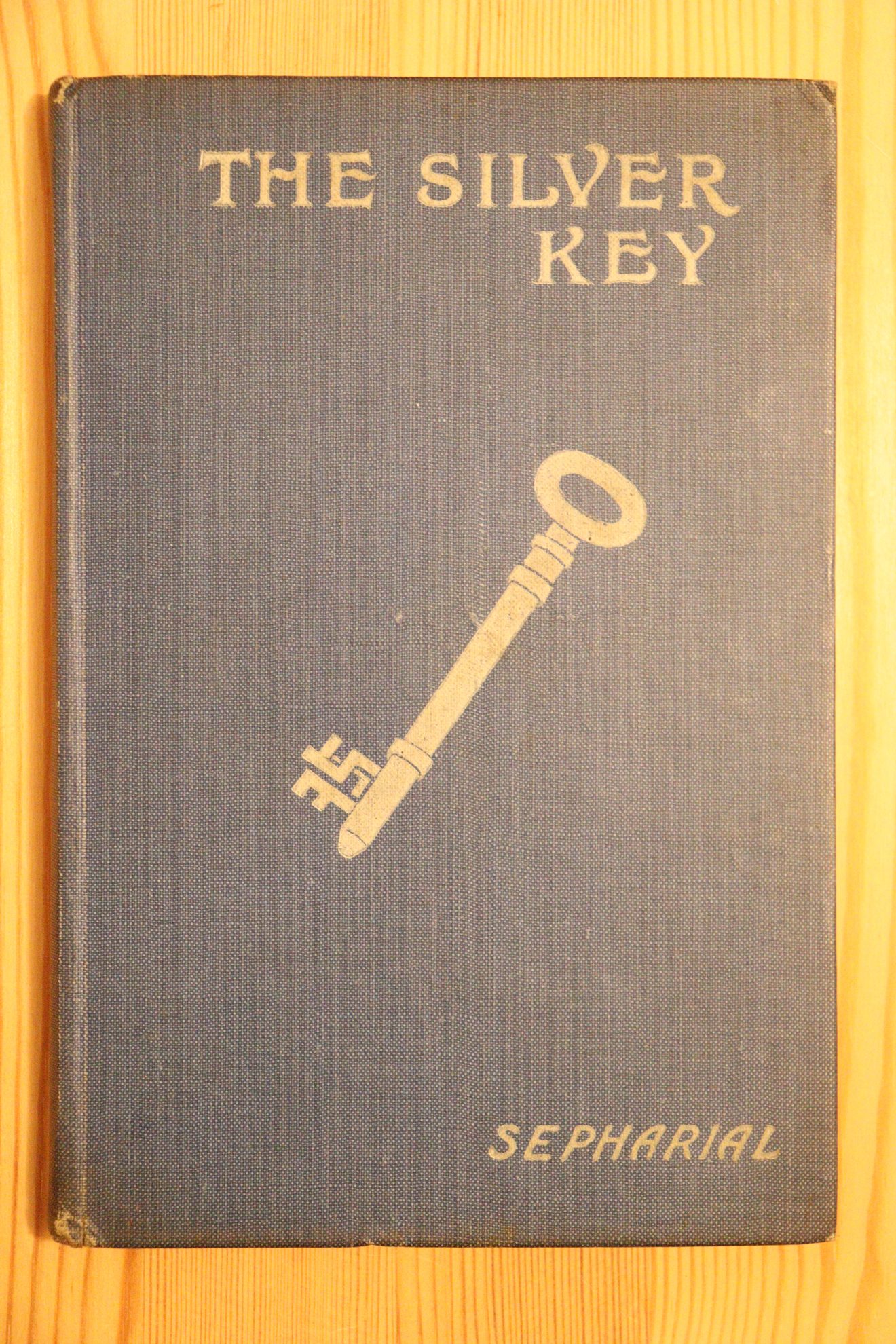
3. Font styling in which SEPHARIAL is printed on the front board must be non-italic (as shown below). Only the original printing has the author’s name in silver on the front board without italic styling. The lack of italics here is the final defining clue that you are dealing with a true first edition, and can come in handy as a quick way to distinguish one from a later printing, even if a bookseller has not indicated the publisher address or the page count anywhere in their listing. Conversely, if you see SEPHARIAL in italics on the front board, you know immediately that you are not looking at a first edition!
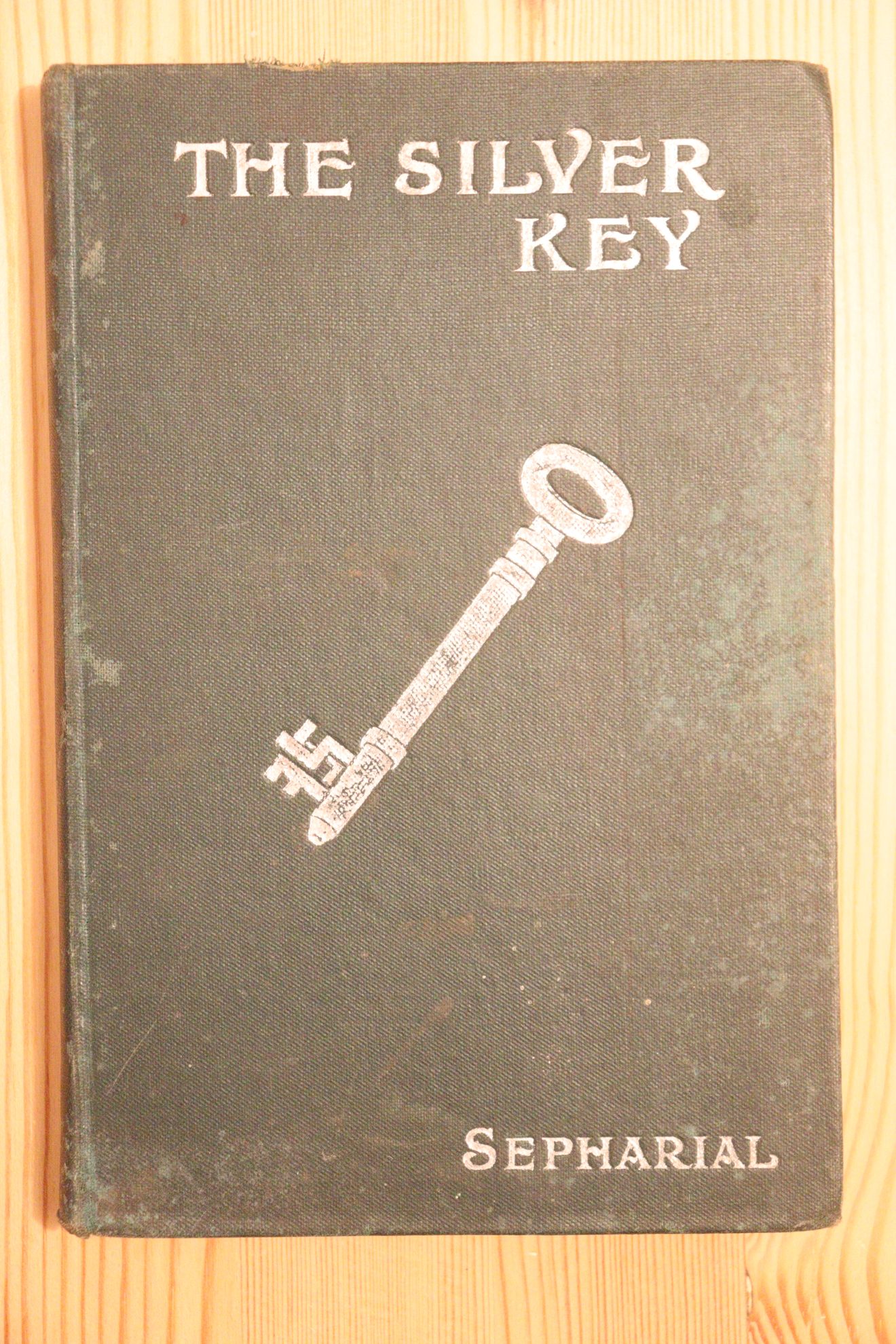
Another clue that becomes more apparent when you picture the different impressions side by side is that only the first edition, at least on copies I’ve examined, has deep green-coloured cloth – all the later ones are blue.
How to distinguish different impressions of the second edition of The Silver Key
Now suppose you are looking at a Foulsham printing of The Silver Key that does not meet these three identifying requirements. So it’s not a first edition. But it’s still valuable, right?
Yes, because even second editions and later printings of The Silver Key bearing the Foulsham imprint are sought after by collectors provided that they have the silver key and title on the front board. It’s all a matter of degree, however. They will never be nearly as valuable as first editions, but they are still going to be a lot more valuable than any reprint from after 1939.
Not all second editions are equal among themselves, however, and this is where things get more complicated, because distinguishing different impressions of the second edition of The Silver Key is more difficult than distinguishing the first edition from all later editions.
Second edition, 1st impression (61 Fleet Street, 1919)
All second editions are limited to at most 94 main pages, and they all have SEPHARIAL in italics on the front board, but only one is the original printing of the second edition – this is the one with the following two identifying features:
1. Publisher’s name and address in print on the title page must read ‘W. Foulsham & Co., Ltd., Sixty-One Fleet Street, London, E.C. 4’.
Foulsham was based at 61 Fleet Street only from 1917 to 1921. This was their next address after moving from 5, Pilgrim Street, their address at the time of the first edition.
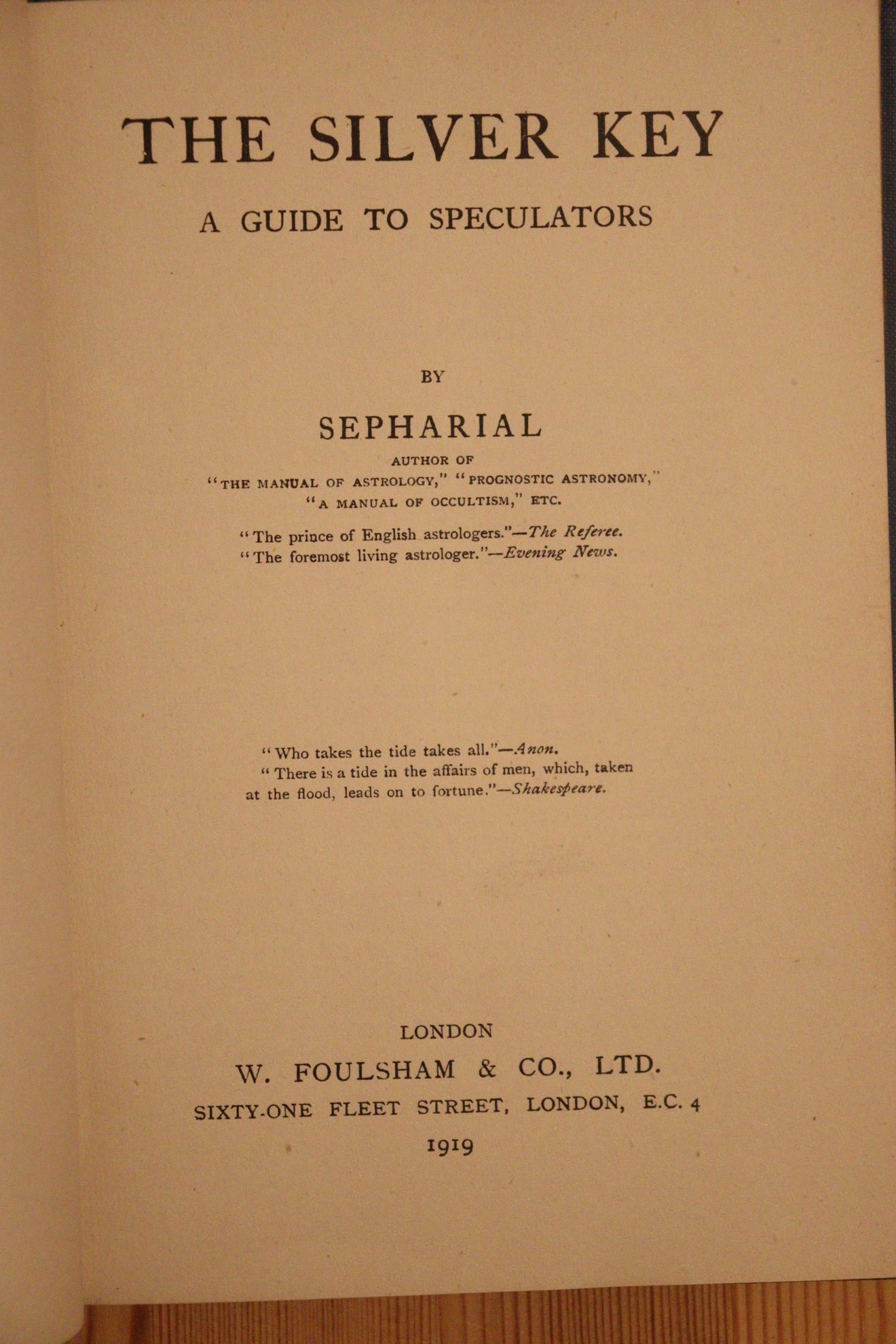
2. Date must be present in print on the title page and must read: 1919.
Only the first impression of the second edition has the 1919 date in print on the title page.
We have already covered the different font styling on the front board, but just to illustrate, here is the front board of the original second edition, showing that italic font:
Second edition, 2nd impression (61 Fleet Street, undated)
If you are dealing with a copy of The Silver Key that has the correct address for a first impression of the second edition but does not have 1919 on the title page, then it is a second impression of the second edition, and the date could be as late as 1921, which is as good an estimate as any. And yes, there are in fact such printings – I have one in my second-hand shop at the time of writing, in fact. Here’s its title page:
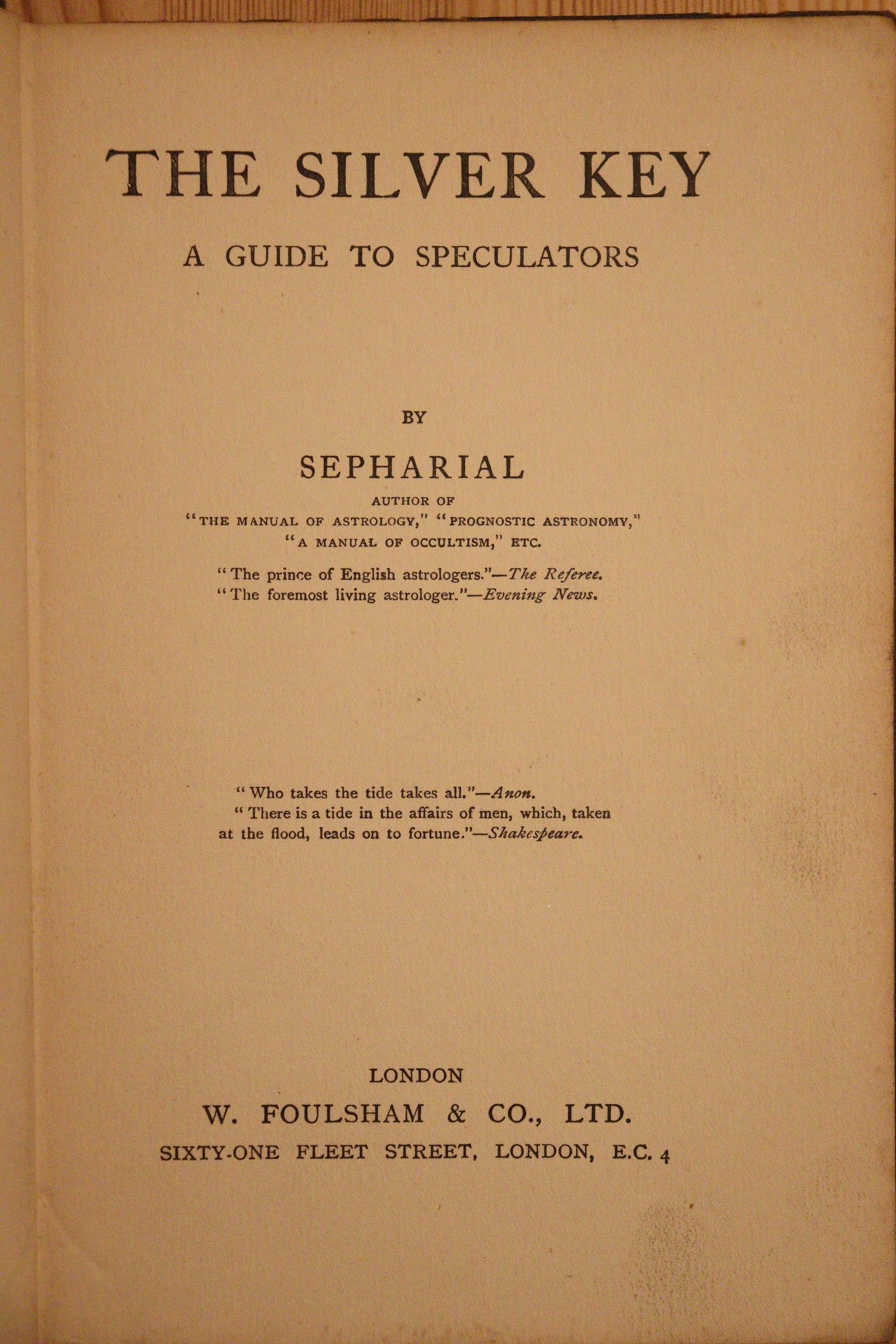
In other respects, this impression looks much the same as the 1919 edition – the pagination ends on p. 94, and the front board has the italic font we’ve already seen pictured for the first impression of the second edition – so there is no need to show this again.
Second edition, 3rd impression (10 & 11 Red Lion Court, undated)
We’ve now covered the first three proven distinct printings of The Silver Key. But that is not where the history of the publication of the book by Foulsham in cloth boards with a silver gilt key on the front board ends, because there were also at least two printing at Foulsham’s next address after 61 Fleet Street, and in fact the change of address is not the only distinguishing feature of the second of those later impressions, because the subtitle of the book also changed some time after the 2nd edition, 3rd impression, as indicated in the coverage of the 2nd edition, 4th impression, below; and the final page of text was removed, besides.
But before we get to the last of the proven impressions, let’s take a quick look at the first of the two known printings at Foulsham’s next address.
While I don’t have a reference copy of this printing, one came up for sale since this article was first published, including pictures of the front board and title page, and I’m therefore able to describe it.
This 2nd edition, 3rd impression is characterised by these main features:
1. Title page gives the publisher address as 10 & 11, Red Lion Court, Fleet Street, London, E.C… This it the address to which Foulsham moved during 1922, and where it would remain until some time in 1939.
2. The subtitle on the title page is still in its original form of A Guide to Speculators. This would change in the fourth impression of the second edition.
3. The front board is unchanged in design from the two previous printings of the second edition, with Sepharial appearing in italics beneath the silver key image.
Second edition, 4th impression (No address on title page, undated)
You know that you are instead looking at the 4th or a later-still impression of the second edition when it has the following distinctive characteristics:
1. The subtitle on the title page has changed to A Scientific Guide to Speculation – as pictured below. This subtitle was not present on any of the three earlier impressions of this edition, or on the first edition.
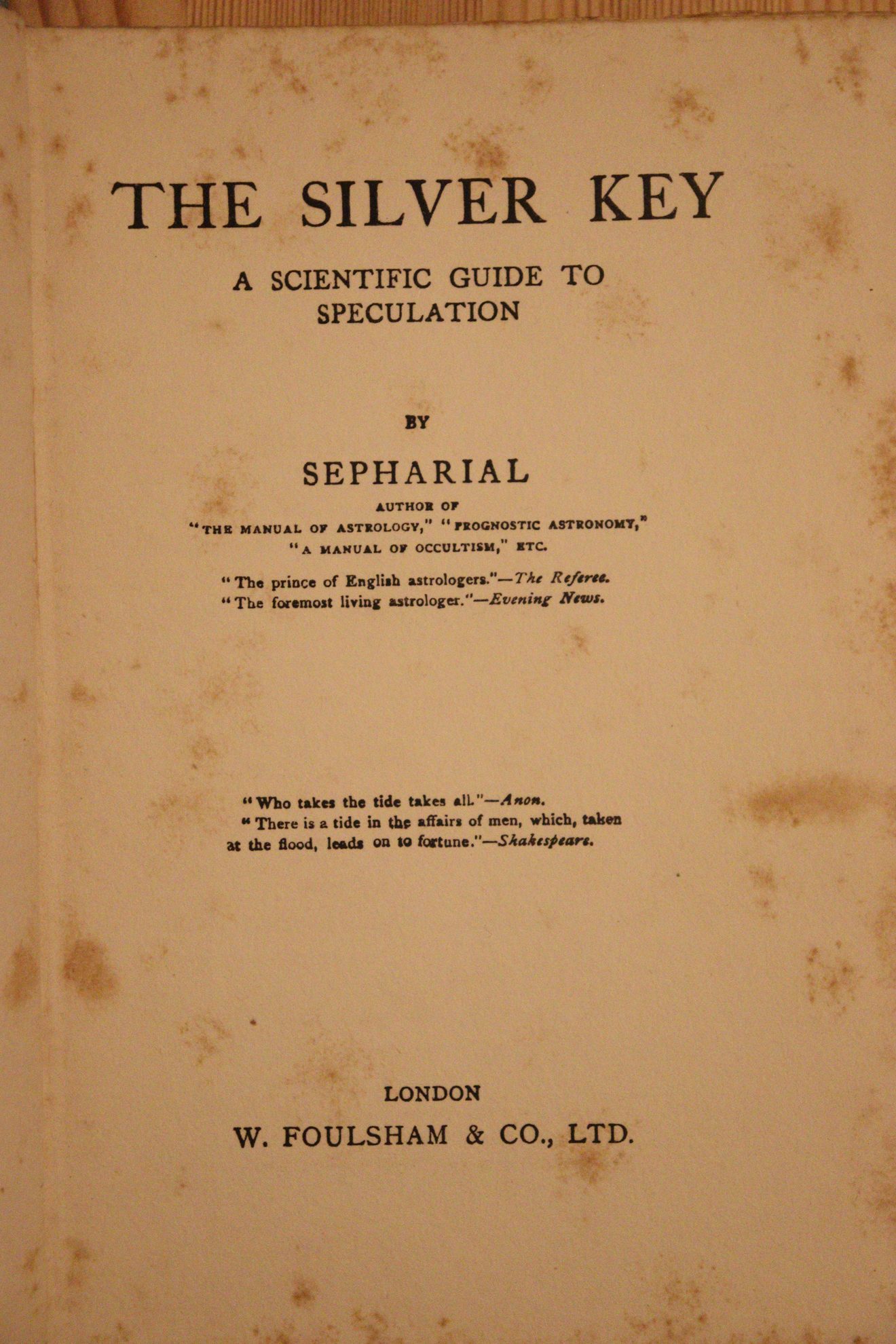
2. No address given for the publisher on the title page: just W. Foulsham & Co., London (as seen above). This marks this impression out in distinction from the 2nd edition, 3rd impression, which expressly gave the new address on the title page.
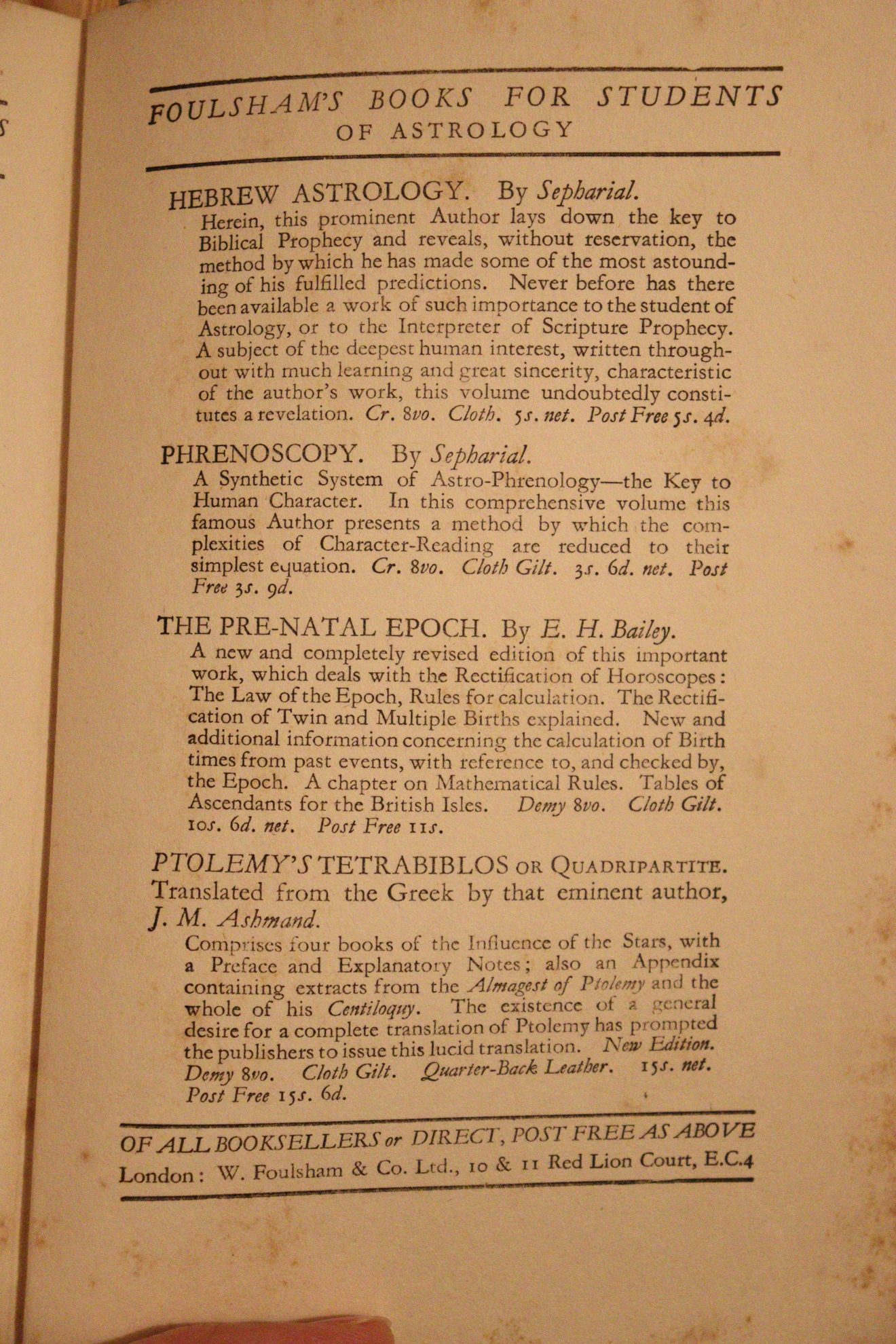
But when you look in the advertisements at the back of this impression, you can see that the publisher’s address is in fact 10 & 11 Red Lion Court, the same as for the 3rd impression. Among the other books advertised here is Sepharial’s book Hebrew Astrology, which was first published in 1929. This impression seems likely therefore to be from the 1930s, thus the latter part of the period between 1922 and 1939 when it occupied this address.
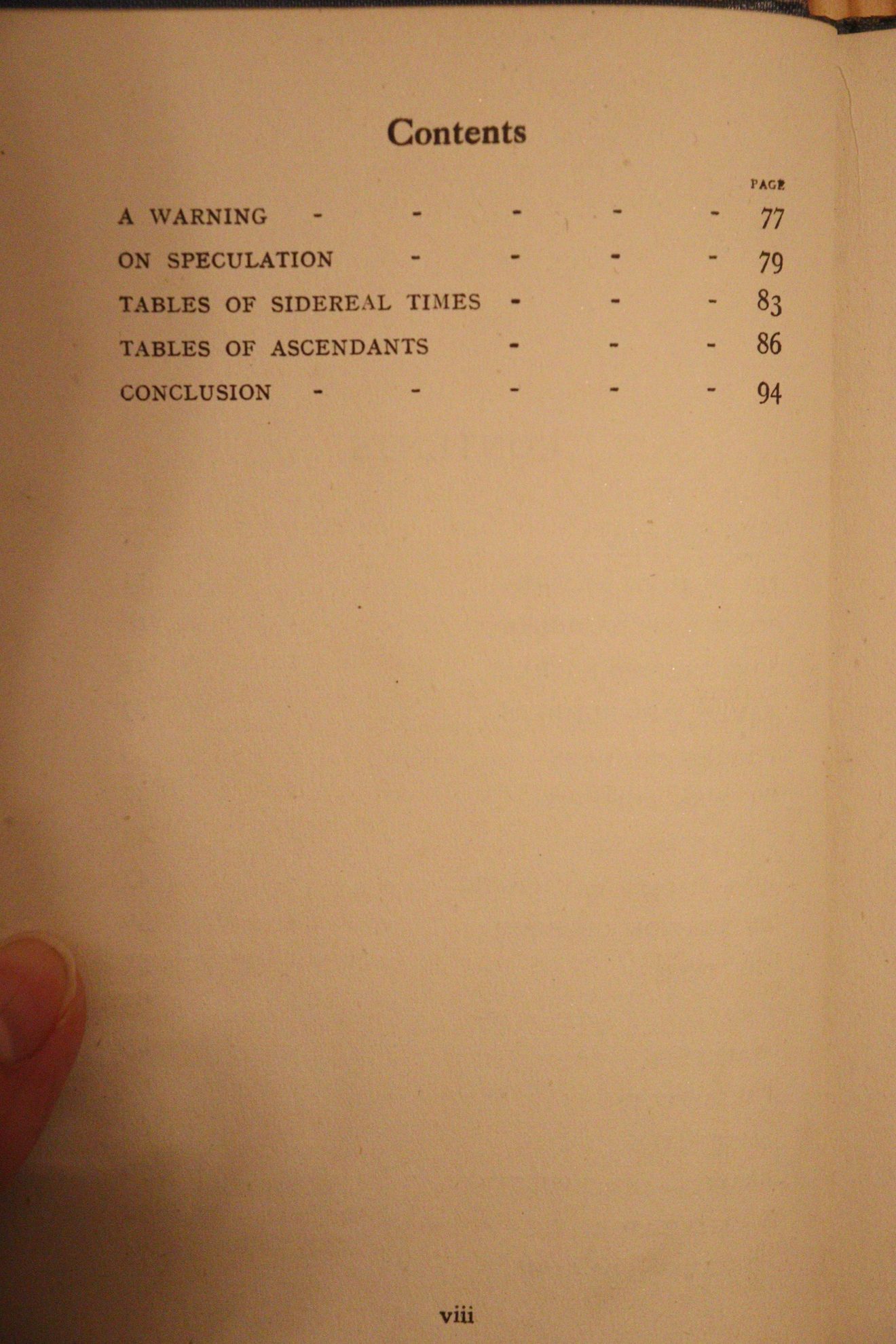
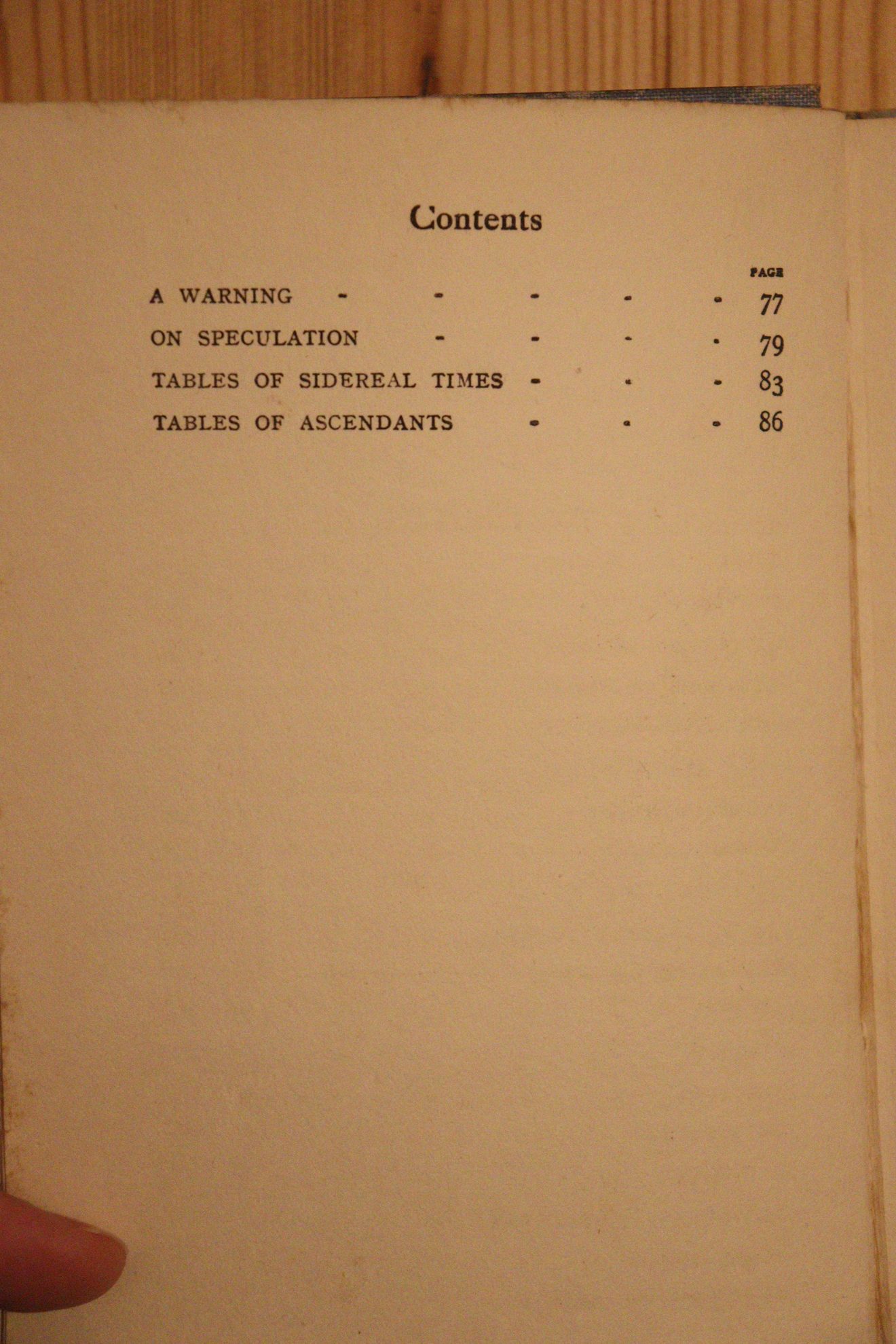
3. The text ends abruptly after p. 93, at variance with both the first two impressions of the second edition, which featured a conclusion on p. 94 that was advertised on the table of contents; with the fourth impression, there is no p. 94, and there is no conclusion even advertised in the table of contents:
Without having personally accessed a copy of the 2nd edition, 3rd impression, I cannot be sure whether the removal of the conclusion had already taken place in that impression (the one with 10 & 11 Red Lion Court printed on the title page), or whether it only took place in combination with the change of subtitle for this final impression.
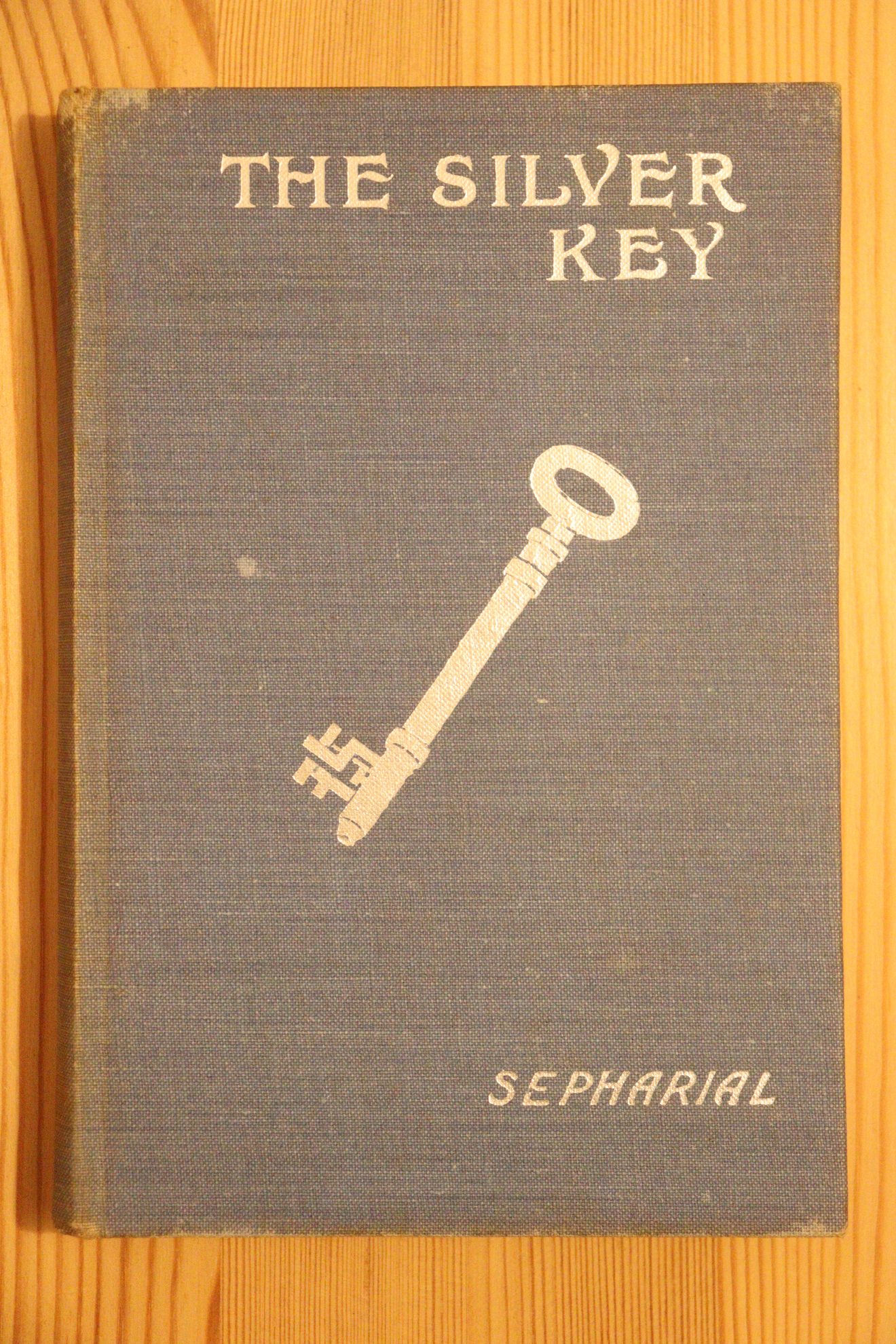
However, it stands to reason that this last of the known Foulsham printings, with the changed subtitle as well as no street address on the title page, but 10 & 11 Red Lion Court in the advertisements at the back, is the least valuable of these five states for the Foulsham editions of Sepharial’s book The Silver Key, because it is not the first, the second, the third or even the fourth overall printing, and has marginally fewer pages than any of the first three impressions. But even it is valuable (though to a lesser degree than any of the four earlier printings) because the period spanning 1929-1939 is still a long time ago now and it still bears the original design values of the 1919 second edition, including the italicised font to the author’s name on the front board:
So ends my expert guide to identifying and dating early editions of Sepharial’s Gann-list title The Silver Key. There are at least five Foulsham printings, and they are not all alike or equal, so don’t ever allow yourself to be mis-sold a second edition as a first, or a second edition, fourth impression as an original second edition either.